(Raag Sarang)
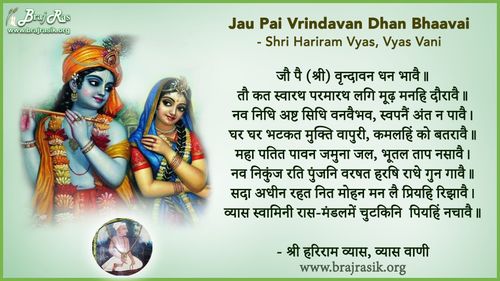
Jau Pai (Shri) Vrindavan Dhan Bhaavai
Tau Kat Svaarath Paramaarath Lagi Moodh Manahi Dauraavai [1]
Nav Nidhi Asht Sidhi Vanavaibhav, Svapanain Ant Na Paavai
Ghar Ghar Bhatakat Mukti Vaapuri, Kamalahin Ko Bataraavai [2]
Maha Patit Paavan Jamuna Jal, Bhootal Taap Nasaavai
Nav Nikunj Rati Punjani Varashat Harashi Radhe Gun Gaavai [3]
Sada Adheen Rahat Nit Mohan Man Lai Priyahi Rijhaavai”
Vyas Swamini Raas-mandalme Chutakini Piyahin Nachaavai” [4]
- Shri Hariram Vyas, Vyas Vani, Purvardh (221)
Those whose minds are immersed in the nectar of Shri Vrindavan Dham find no interest in worldly pleasures or other forms of spiritual ecstasy. Other spiritual joys pale in comparison to the bliss of Vrindavan Dham. [1]
Such devoted minds remain unswayed by the allure of the Nine treasures, the allure of eight psychic powers, material opulence, and more, even in their dreams! In Vrindavan Dham, even Liberation (Mukti) roams from home to home seeking acceptance helplessly, but no one inadvertently embraces it. This bliss is eternally sought after, even by deities like Maha Lakshmi (Kamla), yet remains unattained. [2]
Shri Yamuna, the river residing in Vrindavan Dham, graciously redeems the most fallen souls. The deepest joy pours like rain in the bowers of Nikunj in Vrindavan. Those who experience it sing Shri Radha's praises from the depths of their hearts and chant 'Radha' with boundless devotion. [3]
Shri Radha is the supreme Swamini, and Shri Krishna is forever under her loving control. The Beloved Lord Shri Krishna desires only to continuously delight Shri Radha. Shri Hariram Vyas, the incarnation of Vishakha Sakhi, proclaims, "In the Raas Mandal of Vrindavan, Shri Radha makes Shri Krishna dance to her tune (by snapping her fingers). Oh dear, I offer myself as a sacrifice to the treasure of Vrindavan." [4]
Jau Pai (Shri) Vrindavan Dhan Bhaavai
Tau Kat Svaarath Paramaarath Lagi Moodh Manahi Dauraavai [1]
Nav Nidhi Asht Sidhi Vanavaibhav, Svapanain Ant Na Paavai
Ghar Ghar Bhatakat Mukti Vaapuri, Kamalahin Ko Bataraavai [2]
Maha Patit Paavan Jamuna Jal, Bhootal Taap Nasaavai
Nav Nikunj Rati Punjani Varashat Harashi Radhe Gun Gaavai [3]
Sada Adheen Rahat Nit Mohan Man Lai Priyahi Rijhaavai”
Vyas Swamini Raas-mandalme Chutakini Piyahin Nachaavai” [4]
- Shri Hariram Vyas, Vyas Vani, Purvardh (221)
Those whose minds are immersed in the nectar of Shri Vrindavan Dham find no interest in worldly pleasures or other forms of spiritual ecstasy. Other spiritual joys pale in comparison to the bliss of Vrindavan Dham. [1]
Such devoted minds remain unswayed by the allure of the Nine treasures, the allure of eight psychic powers, material opulence, and more, even in their dreams! In Vrindavan Dham, even Liberation (Mukti) roams from home to home seeking acceptance helplessly, but no one inadvertently embraces it. This bliss is eternally sought after, even by deities like Maha Lakshmi (Kamla), yet remains unattained. [2]
Shri Yamuna, the river residing in Vrindavan Dham, graciously redeems the most fallen souls. The deepest joy pours like rain in the bowers of Nikunj in Vrindavan. Those who experience it sing Shri Radha's praises from the depths of their hearts and chant 'Radha' with boundless devotion. [3]
Shri Radha is the supreme Swamini, and Shri Krishna is forever under her loving control. The Beloved Lord Shri Krishna desires only to continuously delight Shri Radha. Shri Hariram Vyas, the incarnation of Vishakha Sakhi, proclaims, "In the Raas Mandal of Vrindavan, Shri Radha makes Shri Krishna dance to her tune (by snapping her fingers). Oh dear, I offer myself as a sacrifice to the treasure of Vrindavan." [4]