(Raag Sarang)
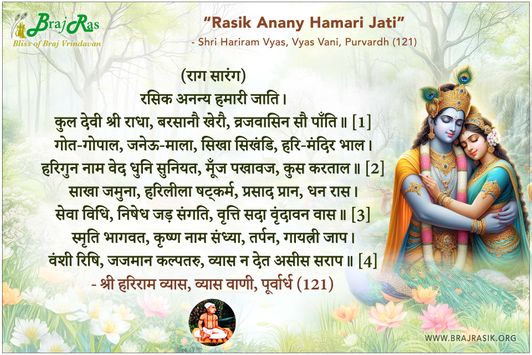
Rasik Anany Hamari Jati.
Kul Devi Shri Radha, Barsanau Kherau, Vrajvasin Sau Paanti. [1]
Got-Gopal, Janeu-Mala, Sikha Sikhandi, Hari-Mandir Bhal.
Harigun Naam Ved Dhuni Suniyat, Moonj Pakhavaj, Kus Kartal. [2]
Sakha Jamuna, Harileela Shatkarm, Prasad Pran, Dhan Raas.
Sewa Vidhi, Nishedh Jad Sangati, Vritti Sada Vrindavan Vaas. [3]
Smriti Bhagvat, Krishn Naam Sandhya, Tarpan, Gayatri Jaap.
Vanshi Rishi, Jajaman Kalpataru, Vyas Na Det Asees Sarap. [4]
- Shri Hariram Vyas, Vyas Vani, Purvardh (121)
Our caste is that of the ‘Rasika Ananya’ (exclusive connoisseurs of divine love).
Our Kuldevi (family deity) is Shri Radha, our homeland is Barsana, and our community is among the residents of Braj. [1]
Our gotra (lineage) is Gopal, ‘kanthi mala’ is the sacred thread. The peacock feather crowns our tuft of hair, and our foreheads gleam with a tilak, a radiant symbol similar to a temple of Hari.
The chanting of Shri Hari’s virtues and divine names resounds as our Vedic hymn. The rhythmic beats of the mridanga echo as our sacred cord, the pakhawaj as our ceremonial cadence, and the kartal as our ‘kusa’ (holy grass used in vedic ritual). [2]
Shri Yamuna is the source of life for our sacred lineage, while the divine pastimes of Hari form the essence of our six sacred rites. Prasadam is our life breath, and the divine Raas dance is the wealth we seek and cherish.
Our guiding principle is seva—service to the Lord. We distance ourselves from the company of those devoid of devotion. Continuous residence in Shri Vrindavan is our way of life. [3]
‘Shrimad Bhagavatam’ serves as our ‘Smriti’ (vedic literature), and the name of Krishna fulfills the roles of our evening prayer, our offerings, and our Gayatri mantra.
‘Vanshi’ (flute) represents the sages, and the sacred groves along the riverbanks are like a wish-fulfilling tree for the ‘Yajman’ (host). Shri Hariram Vyas says unlike the Karma Kandis bound by ritual, we neither bestow blessings nor curses, nor do we bear attachment or aversion to any soul. [4]
Rasik Anany Hamari Jati.
Kul Devi Shri Radha, Barsanau Kherau, Vrajvasin Sau Paanti. [1]
Got-Gopal, Janeu-Mala, Sikha Sikhandi, Hari-Mandir Bhal.
Harigun Naam Ved Dhuni Suniyat, Moonj Pakhavaj, Kus Kartal. [2]
Sakha Jamuna, Harileela Shatkarm, Prasad Pran, Dhan Raas.
Sewa Vidhi, Nishedh Jad Sangati, Vritti Sada Vrindavan Vaas. [3]
Smriti Bhagvat, Krishn Naam Sandhya, Tarpan, Gayatri Jaap.
Vanshi Rishi, Jajaman Kalpataru, Vyas Na Det Asees Sarap. [4]
- Shri Hariram Vyas, Vyas Vani, Purvardh (121)
Our caste is that of the ‘Rasika Ananya’ (exclusive connoisseurs of divine love).
Our Kuldevi (family deity) is Shri Radha, our homeland is Barsana, and our community is among the residents of Braj. [1]
Our gotra (lineage) is Gopal, ‘kanthi mala’ is the sacred thread. The peacock feather crowns our tuft of hair, and our foreheads gleam with a tilak, a radiant symbol similar to a temple of Hari.
The chanting of Shri Hari’s virtues and divine names resounds as our Vedic hymn. The rhythmic beats of the mridanga echo as our sacred cord, the pakhawaj as our ceremonial cadence, and the kartal as our ‘kusa’ (holy grass used in vedic ritual). [2]
Shri Yamuna is the source of life for our sacred lineage, while the divine pastimes of Hari form the essence of our six sacred rites. Prasadam is our life breath, and the divine Raas dance is the wealth we seek and cherish.
Our guiding principle is seva—service to the Lord. We distance ourselves from the company of those devoid of devotion. Continuous residence in Shri Vrindavan is our way of life. [3]
‘Shrimad Bhagavatam’ serves as our ‘Smriti’ (vedic literature), and the name of Krishna fulfills the roles of our evening prayer, our offerings, and our Gayatri mantra.
‘Vanshi’ (flute) represents the sages, and the sacred groves along the riverbanks are like a wish-fulfilling tree for the ‘Yajman’ (host). Shri Hariram Vyas says unlike the Karma Kandis bound by ritual, we neither bestow blessings nor curses, nor do we bear attachment or aversion to any soul. [4]