
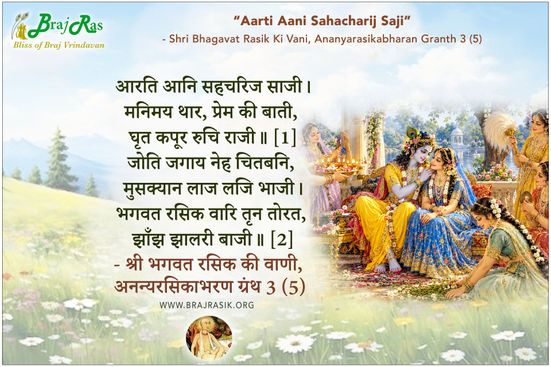
Aarti Aani Sahacharij Saji.
Manimaya Thaar, Prem Ki Bati, Ghrit Kapur Ruchi Raji. [1]
Joti Jagaya Neh Chitabani, Musakyan Laaj Laji Bhaji.
Bhagavat Rasik Vari Trin Torat, Jhaanjh Jhalari Baji. [2]
- Shri Bhagavat Rasik, Bhagavat Rasik Ki Vani, Ananyarasikabharan Granth 3 (5)
In this pada, Śrī Bhagavada Rasika Jī has beautifully depicted how the sakhīs of the nitya-vihāra, expressing the loving sentiments of their hearts, perform the ārati of Priyā-Priyatama with great love.
The sahacarīs have come and arranged a wondrous ārati for Priyā-Lāla, in which the mind itself is the ceremonial plate, love is the wick, and the countless loving desires to serve Lāḍilī-Lāla in this vihāra shine as the ghee and camphor. [1]
The flame is kindled with an affectionate glance, and they have scattered the puffed grains of sweet smiles, before which even ordinary puffed rice grains flee in shame. Śrī Bhagavata Rasika Jī says that the sahacarīs, utterly captivated by the beauty of the rasika Divine Couple, offer themselves upon Them and break blades of grass in loving adoration, and the sound of that very act seems to become the music of jhāñjha and jhālarī. [2].
Manimaya Thaar, Prem Ki Bati, Ghrit Kapur Ruchi Raji. [1]
Joti Jagaya Neh Chitabani, Musakyan Laaj Laji Bhaji.
Bhagavat Rasik Vari Trin Torat, Jhaanjh Jhalari Baji. [2]
- Shri Bhagavat Rasik, Bhagavat Rasik Ki Vani, Ananyarasikabharan Granth 3 (5)
In this pada, Śrī Bhagavada Rasika Jī has beautifully depicted how the sakhīs of the nitya-vihāra, expressing the loving sentiments of their hearts, perform the ārati of Priyā-Priyatama with great love.
The sahacarīs have come and arranged a wondrous ārati for Priyā-Lāla, in which the mind itself is the ceremonial plate, love is the wick, and the countless loving desires to serve Lāḍilī-Lāla in this vihāra shine as the ghee and camphor. [1]
The flame is kindled with an affectionate glance, and they have scattered the puffed grains of sweet smiles, before which even ordinary puffed rice grains flee in shame. Śrī Bhagavata Rasika Jī says that the sahacarīs, utterly captivated by the beauty of the rasika Divine Couple, offer themselves upon Them and break blades of grass in loving adoration, and the sound of that very act seems to become the music of jhāñjha and jhālarī. [2].